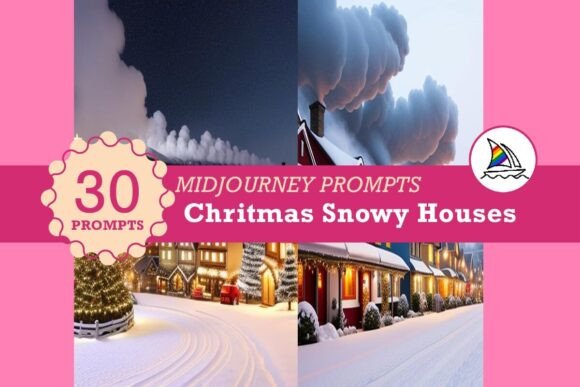
Prompt for Christmas Snowy Houses: A Practical Guide to Creating Festive Winter Scenes
Few images capture the magic of the holiday season quite like a snow-covered cottage glowing with warm light. If you have been exploring ways to generate these scenes using AI tools, you have likely encountered references to a Prompt for Christmas Snowy Houses — a structured template approach that helps you produce consistent, detailed winter village imagery. This article walks through what this prompt resource offers, how it compares with other methods, and how to decide whether it fits your needs.
What the Prompt for Christmas Snowy Houses Actually Includes
At its core, the Prompt for Christmas Snowy Houses is a downloadable PDF guide that provides a ready-to-use prompt template. Rather than starting from scratch each time you want to generate a snowy cottage scene, you receive a structured framework you can adapt and reuse. The resource is designed for adults who are actively comparing options — whether you are a content creator, a hobbyist designing holiday cards, or someone looking for a thoughtful gift for a creative friend.
The PDF contains a fully detailed prompt template along with guidance on how to modify variables such as lighting, architectural style, snow depth, and color palette. This eliminates much of the trial-and-error that comes with crafting effective prompts from scratch. The emphasis is on saving time while maintaining creative control over the final output.
How This Approach Compares with Alternative Methods
When you begin researching ways to generate snowy house imagery, you will encounter several common approaches. Understanding what makes the Prompt for Christmas Snowy Houses distinct — and where it has limitations — will help you decide if it is the right tool for your particular project.
Starting from Scratch vs. Using a Template
Many users begin by typing open-ended descriptions into their AI image generator of choice. For example, they might write something like “a cozy cottage in the snow with Christmas lights” and hope for the best. The results can vary wildly in quality, style, and composition. The Prompt for Christmas Snowy Houses offers a more structured alternative. Because the template has been refined and tested, you are less likely to receive outputs that miss the mark in terms of perspective, mood, or detail level.
That said, working from a template does mean you are starting within a defined framework. If you prefer total creative freedom and enjoy the process of iterative experimentation, you may find a template somewhat constraining. The best fit depends on whether your priority is efficiency or unrestricted exploration.
General Holiday Prompts vs. Specialized Winter House Prompts
Another common alternative is using broad holiday-themed prompts that include many elements — Santa, reindeer, Christmas trees, presents — alongside a house in the snow. While these can produce festive results, they often spread the visual focus too thin. The Prompt for Christmas Snowy Houses is deliberately narrow in scope. It concentrates entirely on the architecture, environment, and atmosphere of snow-covered homes. This specialization means you get more detail and coherence in the architectural elements, but you will need separate prompts if you want to incorporate figures or specific holiday decorations prominently.
Free Resources vs. Paid Guides
There is no shortage of free prompt collections available online. Social media groups, forums, and blog posts frequently include example prompts for snowy scenes. The tradeoff is that free resources tend to lack depth. You might get one or two decent prompt examples without any explanation of why they work or how to adapt them for different styles. The Prompt for Christmas Snowy Houses is a paid resource, though it includes a free Midjourney guide as part of the package. The investment buys you a more thorough, curated experience with documented reasoning behind the template structure.
Strengths and Tradeoffs: When This Resource Shines
Having evaluated several approaches, I have found that the Prompt for Christmas Snowy Houses offers clear advantages in specific scenarios. Understanding these can help you match the resource to your actual use case.
Consistency Across Multiple Outputs
If you are generating a series of images — for example, a set of holiday cards, a social media campaign, or a collection of winter scenes — consistency matters. Using the same template as a foundation allows you to produce images that feel cohesive in style and quality. Each variation you make within the template keeps the core visual language intact. This is much harder to achieve when writing every prompt from scratch because small wording differences can produce radically different results.
Learning the Mechanics of Prompt Crafting
Beyond generating images, the PDF serves as a learning tool. By working through the template, you begin to understand how specific keywords affect lighting, texture, and composition. This knowledge transfers to future projects even if you move beyond snowy house scenes. The included Midjourney guide adds further educational value, especially if you are relatively new to the platform.
Gift-Giving Potential
The resource also works well as a gift for someone who enjoys digital art or AI experimentation but may not have the time or patience to develop their own prompts. It removes friction from the creative process, which can be especially thoughtful for busy friends or family members who want to create something personal for the holidays.
Limitations and When You Might Need Another Option
No single resource covers every use case. Here are some scenarios where the Prompt for Christmas Snowy Houses may not be the ideal choice.
You Need Extreme Visual Diversity
If your project calls for wildly different architectural styles — from alpine chalets to Victorian mansions to modern glass houses — a single template may feel repetitive. While you can modify the template significantly, its structure is optimized for a certain type of cozy, traditional winter scene. For projects requiring broad stylistic range, you would be better served by a more flexible prompt strategy or a collection of varied templates.
You Prefer to Learn Through Free Exploration
Some users enjoy the process of trial and error. They learn best by testing hundreds of prompts, observing patterns, and gradually refining their techniques. If that describes you, a pre-built template might feel like skipping the most instructive part of the journey. In that case, you may prefer to invest your time rather than your money.
Your Workflow Relies on a Specific Tool Other Than Midjourney
The included free guide focuses on Midjourney. While the prompt template itself can be adapted for other platforms like DALL·E, Stable Diffusion, or Firefly, the supplementary guidance will be most directly useful to Midjourney users. If you use a different generator exclusively, you may find that portion of the resource less actionable.
Decision Factors to Consider
To determine whether the Prompt for Christmas Snowy Houses aligns with your needs, reflect on the following questions:
- What is your skill level with AI image generation? Beginners and intermediate users tend to benefit most from structured templates. Advanced users may find the template restrictive unless they value efficiency.
- How much time do you want to spend on prompt crafting? If you would rather spend that time on image selection and refinement, a template is valuable. If prompt crafting is part of the fun for you, you may not need it.
- Are you producing a cohesive set of images? If consistency across outputs matters, the template approach is hard to beat.
- What is your budget for creative tools and resources? The resource is reasonably priced, especially when you factor in the free Midjourney guide. But if your budget is zero, free prompt collections may suffice even if they offer less depth.
Realistic Example: Using the Template in Practice
Imagine you want to generate a series of winter scenes for a holiday marketing campaign. Without a template, you might write five separate prompts and receive images that differ in perspective, mood, and detail density. With the Prompt for Christmas Snowy Houses, you start from a single proven base. You can then systematically adjust one variable at a time — changing the architectural style from cottage to cabin, shifting the lighting from morning glow to evening lantern light, or increasing snow coverage for a more dramatic winter effect. Each resulting image retains a consistent visual quality that ties the series together.
This approach also makes it easier to replicate a successful output later. Because you have documented the prompt structure, you can return to it months later and produce similar results without having to remember the exact phrasing you used originally.
Final Thoughts on Choosing the Right Approach
The Prompt for Christmas Snowy Houses serves a specific purpose well: helping you generate beautiful, consistent snowy house images with less guesswork and more control. It is not a magic solution that covers every creative need, and it does not claim to be. By understanding what it offers, how it compares with alternatives, and where its limitations lie, you can make an informed choice that matches your project requirements, skill level, and personal preferences.
Whether you ultimately choose this template approach, write your own prompts from scratch, or combine both methods, the most important factor is that the tool you use supports your creative goals rather than complicating them. If efficiency, consistency, and learning are high on your list, this resource is well worth considering.