Master the 5 Layers of Pyramid Infographic Elements
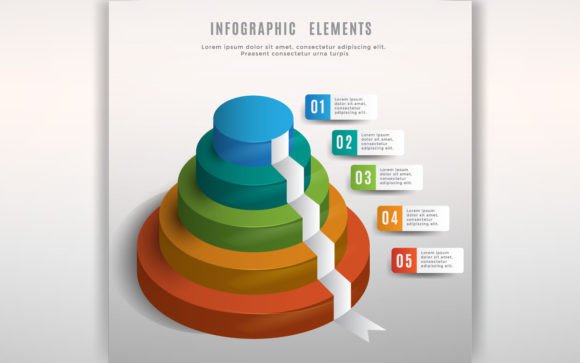
A well-designed infographic does more than decorate a page—it guides the viewer on a clear visual journey, breaking down complex data into memorable stages. The pyramid, with its inherent sense of hierarchy and stability, is one of the most effective structures for achieving this balance. Whether you are preparing an annual report, a product launch banner, or a strategic presentation, the 5 Layers of Pyramid Infographic Elements provide an elegant and logical framework for organizing your narrative. This specific layout template, delivered in versatile vector formats (AI and EPS) alongside a high-resolution JPEG, offers the professional flexibility that modern graphic design demands.
Why a 5-Layer Pyramid Infographic Works
The true power of a five-layer pyramid lies in its intuitive visual hierarchy. It naturally leads the eye from a broad, foundational base up to a focused pinnacle, or inversely, from a core idea down to supporting details. This makes it ideal for illustrating processes, growth models, priority matrices, or tiered concepts. In visual design, this structure helps you break down complex systems into distinct, digestible stages without overwhelming the audience. Each layer acts as a stepping stone in a storytelling arc, enhancing comprehension and retention for the viewer.
Practical Applications Across Creative Disciplines
This versatile graphic is far more than a static diagram. It serves as a core asset for numerous creative projects, making it a valuable addition to any designer’s toolkit:
- Branding and Brand Identity: Use the pyramid to visually represent a brand’s mission, vision, and service tiers. It can effectively communicate a company’s philosophy, from foundational principles to the ultimate brand promise.
- Marketing and Advertising Campaigns: From digital marketing banners to print advertisements, the pyramid layout grabs attention and quickly conveys a value proposition. It is excellent for breaking down product benefits or customer journey stages.
- Editorial and Print Design: Annual reports, whitepapers, and brochures benefit from the structured clarity of a pyramid infographic. It breaks up text-heavy layouts and makes data visually appealing, aligning with modern editorial design trends.
- Digital and UI/UX Design: In web design and UI design, pyramid structures can visually guide users through a process, such as onboarding flows or feature adoption pathways. Its clear hierarchy directly improves the overall user experience.
- Social Media Graphics: In the fast-paced world of social media, clarity is king. A well-designed pyramid infographic can stop the scroll and deliver a key message in seconds, boosting engagement for your social media content.
Maximizing Impact with Quality Creative Assets
The effectiveness of any design hinges on the quality of its foundational elements. A high-quality vector graphic offers immense practical value in a professional design workflow. The inclusion of both AI and EPS files guarantees compatibility with industry-standard software like Adobe Illustrator, allowing for deep customization without any loss of resolution. This is crucial for maintaining a consistent brand identity, as you can seamlessly adjust typography, the color palette, and composition to fit perfectly within existing brand systems.
The accompanying high-resolution JPEG provides a ready-to-use option for quick mockups, client approvals, or projects where vector editing isn't necessary. This trio of formats ensures that whether you are a freelance graphic designer, an in-house creative director, or a business owner managing your own marketing, you have the flexibility to adapt the asset to any context—from a massive presentation banner to a compact digital ad. The ease of use allows you to focus on the creative strategy rather than technical limitations.
Key Considerations for Using Pyramid Graphics Effectively
To fully harness the power of a 5-layer pyramid infographic, consider these factors during your design process:
- Visual Hierarchy and Readability: Ensure the text and data within each layer are prioritized correctly. Use size, weight, and color to distinguish between primary and secondary information. A clear visual hierarchy ensures the message is absorbed at a glance.
- Typography and Color Palette: Select typefaces that align with your brand’s personality and remain legible at various scales. Your color palette should not only match your brand identity but also enhance the separation between the five layers. Gradients or distinct hues can effectively denote progression or categories.
- Scalability and Adaptability: Because you are working with vector files (AI/EPS), scaling the graphic for a massive conference banner or a small social media icon is effortless. Always test your design at different sizes to ensure the core message remains intact.
- Audience and Context: Tailor the complexity of the graphic to your target audience. A general audience might benefit from simpler icons and bold text, while a specialized industry report could feature more data-dense layers. Understanding audience expectations is key to effective design communication.
- Consistency with Brand Systems: The graphic should feel like a natural extension of your existing brand assets. Consistent application of logos, fonts, and brand guidelines across your creative projects builds trust and professional recognition.
Incorporating a structured pyramid infographic into your design repertoire is a strategic move toward clearer communication and stronger visual storytelling. By selecting a high-quality, versatile layout template that offers multiple file formats, you equip yourself with a powerful tool that adapts to nearly any creative challenge. Whether you are building a brand identity from the ground up or simply need an engaging visual for a client presentation, the deliberate design of a 5-layer pyramid ensures your message not only reaches its audience but resonates deeply and effectively.