Roadmaps Infographic Template V1 for Clearer Planning
Every project starts with a vision, but turning that vision into a step-by-step plan often feels overwhelming. You have deadlines, team members, resources, and goals all moving in different directions. That is where a visual roadmap becomes essential. The Roadmaps Infographic Template V1 provides a structured way to lay out your timeline, highlight key milestones, and communicate your strategy without confusion. Instead of juggling spreadsheets or static documents, you get a clean, visual layout that everyone can understand at a glance.
What makes this template different from a basic timeline
A standard timeline shows events in order, but an infographic roadmap adds depth. With the Roadmaps Infographic Template V1, you can group tasks by phase, emphasize priorities, and show dependencies between milestones. The design itself does the heavy lifting, letting your audience see the big picture and the details simultaneously. Whether you are presenting to stakeholders or aligning your internal team, this clarity reduces misunderstandings and keeps everyone moving toward the same finish line.
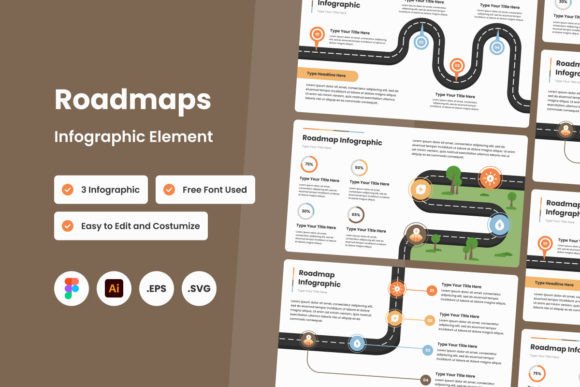
Many project managers find that traditional Gantt charts feel cluttered for non-technical audiences. This template bridges that gap. It offers a visually appealing format that works in boardroom presentations, client proposals, and internal planning sessions. The three unique design variations give you flexibility, so you can match the template to your brand or the tone of your report without starting from scratch.
Why you might need a roadmap infographic right now
If you have ever tried to explain a six-month project timeline in a meeting, you know how easy it is to lose people after the first few slides. Lists and tables require mental effort to parse. A well-designed infographic, on the other hand, guides the eye naturally from start to finish. The Roadmaps Infographic Template V1 helps you answer common questions before they are asked: When does phase two begin? What is the next major deliverable? How do these tasks connect? By answering these visually, you save time and reduce back-and-forth emails.
This template supports several common scenarios:
- Product launches – Map out development, testing, marketing, and release dates in one cohesive view.
- Quarterly planning – Show leadership how your team will allocate resources and hit targets over the next three months.
- Event coordination – Display preparation phases, vendor deadlines, and promotional timelines for conferences or webinars.
- Educational curricula – Teachers and trainers can outline course modules, assessment dates, and project due dates for students.
- Personal goal setting – Freelancers and entrepreneurs can track business milestones, skill development, or product iterations.
Practical ways to use the template in your work
The beauty of the Roadmaps Infographic Template V1 lies in its adaptability. You do not need to be a designer to get professional results. All elements are organized in neat layers, so you can swap colors, adjust text, and rearrange blocks without breaking the layout. This is especially helpful when you need to update the roadmap as your project evolves. A simple edit to a layer keeps your visual current, rather than forcing you to rebuild from scratch.
For marketing teams, this template doubles as a persuasive tool. Imagine presenting a campaign roadmap to a client. Instead of a bullet-point list of dates and deliverables, you show a polished infographic that highlights the creative process, key milestones, and expected outcomes. The client immediately sees the value and the logic behind each phase. That kind of clarity builds trust and makes approvals faster.
Small business owners and entrepreneurs often juggle multiple projects with limited staff. Using this template helps you communicate priorities clearly, so your team knows what to focus on each week. You can print it for a wall board or share it digitally in a slide deck. The full file formats – .Fig, .Ai, .Eps, and .Svg – mean you can open and edit the template in software you already use, whether that is Figma, Adobe Illustrator, or another vector tool.
Getting started even if you are new to design tools
If you have never worked with vector files before, do not worry. The template is built with ease of customization in mind. The layers are clearly named, and the fonts used are open source, so you can download them for free if needed. Simply open the file, click on the text or shape you want to change, and type your own content. The design variations give you a head start, so you only need to tweak details rather than invent a layout from zero.
For educators, this template can transform a standard syllabus into an engaging course roadmap. Students appreciate seeing the semester laid out visually, with major assignments, holidays, and review sessions clearly marked. It reduces anxiety around deadlines and helps them plan their study time. Similarly, freelancers can use the roadmap to show clients a project timeline during the proposal stage, demonstrating professionalism before a contract is even signed.
Important considerations before you download
While the template is straightforward to use, a few points deserve attention. First, the preview images you see on the product page are for demonstration only. They are not included in the main file. This means you will need to supply your own photography or icons if your roadmap requires visual accents beyond the built-in design elements. That said, the template itself provides enough structure that you can often rely on typography and color alone to communicate your message.
Second, consider your audience. A roadmap infographic works best when the information is concise. If your project has dozens of milestones, you may need to simplify or group them before placing them into the template. The goal is clarity, not completeness. Choose the most important markers that tell the story of your project, and let the template handle the visual hierarchy.
Third, remember that the template is a starting point. The three unique designs give you options, but you can also combine elements from different variations if you are comfortable editing layers. The open source fonts and organized structure make this possible without technical headaches. If you need to present the same roadmap in different formats, the included file types ensure you can export to PDF, PNG, or print-ready formats easily.
Who benefits most from this approach
Project managers and business strategists are the obvious audience, but the Roadmaps Infographic Template V1 also serves bloggers planning content calendars, event coordinators mapping logistics, and hobbyists organizing personal projects. Anyone who needs to communicate a sequence of events with clarity and style will find value here. The template removes the friction of designing from a blank canvas, so you can focus on the substance of your plan rather than the layout of your slide.
For teams working remotely, a shared infographic roadmap becomes a central reference point. Instead of digging through chat logs or email threads to find the latest timeline, everyone checks the visual document. Updates are easy to communicate by sharing the edited file. This consistency reduces miscommunication and keeps team members aligned, even across different time zones.
Making your data shine without overcomplicating
The ultimate value of the Roadmaps Infographic Template V1 is that it turns raw dates and tasks into a story. Viewers see not just what happens next, but why it matters in the overall sequence. That narrative quality is hard to achieve with a simple list, yet it is essential for gaining buy-in from stakeholders, executives, or clients. When people understand the logic behind your timeline, they are more likely to support your decisions and resource requests.
If you are ready to move past static project plans and adopt a visual approach, this template offers a practical, low-effort entry point. The three design variations, organized layers, and multiple file formats give you the flexibility to present your roadmap exactly the way your audience needs to see it. Download the template, replace the placeholder content with your own milestones, and let the clean layout do the rest. Your project timeline will be easier to follow, more engaging to present, and simpler to update as your plans evolve.