Understanding the Medical Infographic Lung Element: A Practical Guide for Clear Respiratory Communication
When it comes to explaining lung health, respiratory anatomy, or pulmonary function, visuals matter immensely. The medical infographic lung element — a simplified yet accurate representation of the respiratory system — has become an essential tool for healthcare professionals, educators, app developers, and wellness brands. Whether you are designing a patient education handout, building a mobile health app, or creating branding for a pulmonary clinic, using a modern, versatile lung illustration helps bridge the gap between complex medical information and clear understanding. This article explores what the medical infographic lung element is, the challenges it addresses, and how different users can apply it effectively to achieve better communication and outcomes.
What Is the Medical Infographic Lung Element?
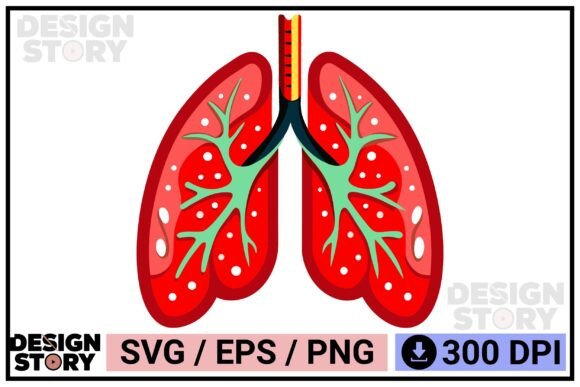
The medical infographic lung element refers to a stylized, vector-based illustration of the lungs that balances anatomical accuracy with clean, modern design. Unlike highly detailed surgical diagrams or overly abstract icons, this type of graphic distills the essential structures — the trachea, bronchi, bronchioles, and alveoli — into a form that is both recognizable and easy to process. It often comes in multiple file formats such as EPS, SVG, and PNG, making it adaptable for print, web, and interactive media. The simplified design is intended for medical apps, healthcare branding, wellness materials, textbooks, presentations, and educational resources. Its strength lies in being detailed enough to convey key respiratory concepts, yet clean enough not to overwhelm the viewer.
Common Challenges in Visualizing Lung Health Information
Communicating about the lungs presents several difficulties, especially when the audience includes patients, students, or the general public. Many people have no medical background and may feel intimidated by technical terms like “inhalation,” “gas exchange,” or “chronic obstructive pulmonary disease.” Standard medical diagrams, while precise, can be cluttered with labels and small text that confuse rather than clarify. On the other hand, overly simplistic clip art may fail to show necessary structures, leading to misunderstanding of conditions like asthma, pneumonia, or lung cancer.
Healthcare brands and educators also struggle with consistency. When creating multiple materials — a brochure, a slide deck, and a mobile app icon — using disparate images can dilute the message and reduce brand recognition. Finding a versatile, scalable illustration that works across contexts is often a time-consuming search. The medical infographic lung element solves these problems by offering a unified visual language that is both professional and approachable.
How the Medical Infographic Lung Element Addresses Communication Gaps
The thoughtful design of the medical infographic lung element directly addresses the need for clarity without sacrificing accuracy. By simplifying the branching structure of the airways and using clean lines, it enables viewers to quickly identify key parts. This is especially valuable for patient education: when a doctor points to a specific lobe or bronchus on an infographic, the patient can follow along without getting lost in fine details.
Moreover, the element is often created with scalability in mind. Because it comes in vector formats (EPS and SVG), it can be resized to fit a small mobile screen or a large poster without pixelation. The PNG version offers a ready-to-use raster option for quick insertion into documents or websites. This flexibility means the same illustration can appear as a primary graphic in an explainer video, a subtle watermark on a wellness app, or a central figure in a printed pamphlet — maintaining visual harmony across all touchpoints.
For medical app developers, the clean vector format also allows easy recoloring. You might want to highlight inflammation in red for an asthma module or show oxygen flow in blue. The simplicity of the design makes such modifications straightforward, helping users create customized educational experiences that cater to specific conditions or demographics.
Practical Applications Across Different User Groups
Different users approach the medical infographic lung element with distinct goals, and the element adapts accordingly. Below are several scenarios illustrating its versatility.
Healthcare Providers and Patient Educators
For physicians, nurses, and respiratory therapists, the primary need is effective dialogue with patients. A simplified lung diagram can be used during consultations to explain how a virus affects the alveoli, where a tumor might be located, or why smoking damages the bronchi. Because the design is clear, it reduces the cognitive load for the patient, allowing them to focus on the message rather than deciphering the image. Many providers report that having a consistent visual reference in their clinic — perhaps printed as a handout or shown on a tablet — improves patient recall and adherence to treatment plans.
When creating these materials, it is recommended to place the lung element alongside brief, plain-language annotations. For example, label the trachea as “windpipe” and the bronchi as “airways.” Pairing the visual with simple text transforms a generic diagram into a powerful teaching tool.
Health and Wellness Brands
Wellness apps, fitness trackers, and meditation platforms often incorporate lung illustrations to represent breathwork or respiratory health. The modern, versatile vector illustration fits naturally in a calming color palette — soft greens, blues, or grays — and conveys a sense of vitality. A yoga app might use the lung element to guide users through breathing exercises: a gentle animation showing lung expansion during deep inhalation can be built from the SVG file. Here, the infographic serves not just as decoration but as an interactive focal point that enhances user engagement.
Branding also benefits. A clinic or supplement company that focuses on lung health can feature the same lung element in logos, website headers, and social media posts. This consistency builds trust: audiences quickly associate the visual with reliable, health-oriented information.
Educators and Textbook Authors
For teachers and writers of science curricula, a detailed yet clean respiratory system illustration is invaluable. Traditional textbooks often rely on grayscale, highly detailed cross-sections that can confuse younger students. The medical infographic lung element, with its simplified but anatomically informed structure, makes lessons more accessible. It can be inserted into worksheets, PowerPoint slides, or online learning modules.
An educator might use the element to label the progression of air: from the nose and mouth down the trachea, into the bronchi, then into the bronchioles, and finally into the alveoli for gas exchange. Because the design is not overly cluttered, students can see the hierarchical branching clearly. To deepen understanding, teachers can supplement the static image with activity sheets that ask students to color-code different parts — again, facilitated by the clean vector lines.
Medical App and Software Developers
Developers building symptom checkers, COPD management tools, or respiratory therapy platforms need icons and illustrations that are both lightweight and meaningful. The EPS and SVG formats integrate seamlessly into design workflows. The lung element can be a button icon, a background graphic for a health dashboard, or a central figure in a 3D-like rotation using CSS transforms. The simplicity of the design ensures fast loading times and crisp rendering on high-DPI screens.
For a telemedicine app, the lung element might appear during a virtual visit, allowing a patient to point to where they feel discomfort. The element thereby facilitates remote diagnosis and patient-provider communication.
Recommendations for Choosing and Using a Lung Infographic Element
When selecting a medical infographic lung element, consider the following to maximize its usefulness:
- File Format Flexibility: Ensure you receive EPS, SVG, and PNG. EPS is best for print, SVG for web and interaction, and PNG for quick placement in documents without vector software.
- Scalability and Resolution: Vector formats should be resolution-independent. Test that the PNG is high-resolution (at least 300 dpi for print).
- Simplicity vs. Detail Balance: Look for a design that shows the main lobes (right and left), trachea, primary bronchi, and maybe finer branches. Too many lines can defeat the purpose; too few may not be informative.
- Customizability: The ability to change colors, add or remove layers, and resize without distortion is crucial. SVG and EPS files typically allow this.
- Licensing and Use Rights: For commercial branding or app development, verify that the file is royalty-free or includes a license for your intended use.
Once you have the file, think about context. A lung infographic element is most powerful when paired with relevant, action-oriented content. For example, if you are building a smoking cessation resource, use the element to show how healthy lungs differ from those affected by smoke. In a wellness article, embed the graphic to illustrate diaphragmatic breathing. The visual becomes a tool for motivation and understanding, not just an ornament.
Outcomes and Long-Term Value
Users who integrate a medical infographic lung element into their materials report several positive outcomes. Patients feel more informed and less anxious during consultations. Students grasp respiratory physiology faster and retain it longer. App users find the interface more intuitive, leading to higher engagement rates. Brands achieve a cohesive visual identity that conveys professionalism and care. For all these reasons, investing in a quality vector illustration of the lungs is not a minor aesthetic decision — it is a strategic communication choice.
In a crowded healthcare landscape, simplicity stands out. The medical infographic lung element allows you to present complex information in a way that is accessible, attractive, and adaptable. Whether you are a doctor, designer, teacher, or entrepreneur, this tool can help you meet your audience where they are — with clarity and confidence.
Final Considerations
As you plan your next project involving respiratory health, keep the user’s perspective at the center. The medical infographic lung element is most effective when it serves the needs of someone trying to understand their own body, a student learning about how we breathe, or a patient managing a chronic condition. By choosing a simplified lung design that is both detailed and clean, you respect your audience’s time and cognitive effort. You give them a visual anchor that makes the abstract tangible.
Whether you incorporate it into a mobile app, a textbook diagram, or a clinic logo, the medical infographic lung element offers a modern, versatile solution. With files in EPS, SVG, and PNG, you have everything you need to create consistent, professional, and helpful content. Start with a clear visual, and the rest of your message will follow naturally.