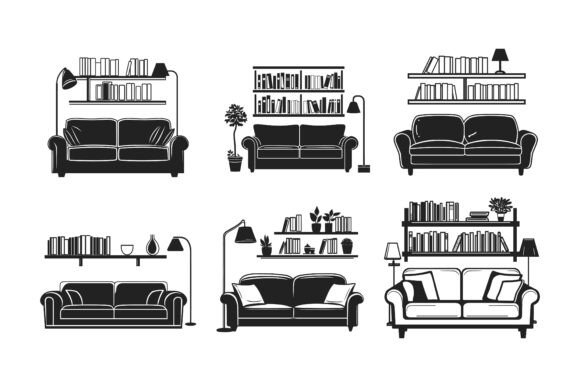
Flat Vector Illustration of Living Room: Why This AI EPS Collection Matters for Your Projects
You are working on a new design, a blog post, an app interface, or a marketing piece, and you need a visual that feels modern, clean, and versatile. A flat vector illustration of a living room can instantly set the tone — welcoming, comfortable, and professional. But finding the right illustration set is not as simple as downloading the first file you see. Many people end up with collections that are difficult to edit, poorly organized, or incompatible with their software. This article walks you through common mistakes when choosing and using such vector assets, and explains how a well-prepared AI EPS collection can save you time, frustration, and money.
What Makes a Flat Vector Illustration of a Living Room So Useful?
A living room scene is one of the most relatable and versatile backgrounds. It can be used in real estate content, interior design blogs, lifestyle articles, app onboarding screens, infographics about home trends, or as a symbol in user interfaces. Because the illustration is flat vector, it remains crisp at any size — from a tiny icon to a large poster. The key is to choose a set that is not only visually appealing but also built for real-world use. The collection mentioned here includes AI and EPS files, a JPG preview, and is designed for both Mac and Windows users. That might sound basic, but many otherwise beautiful sets lack cross-platform compatibility or a logical layer structure, which causes headaches later.
Common Mistake #1: Ignoring File Format and Software Compatibility
One of the most frequent oversights is assuming any vector file will open and work perfectly in any design application. AI (Adobe Illustrator) files are native to Adobe products, while EPS (Encapsulated PostScript) is a more universal format that can be opened in various vector editors such as CorelDRAW, Affinity Designer, or even some open-source tools. If you are a Windows user, you might not have Adobe software installed, so an EPS file becomes essential. Conversely, if you use a Mac, you still need files that handle color profiles and font handling correctly.
What to check before you download or buy:
- Are both AI and EPS formats included? This gives you flexibility.
- Is the set explicitly stated as compatible with Mac and Windows? Some files are created on one platform and may have issues on the other, such as missing fonts or corrupted paths.
- Does the collection include a high-resolution JPG? That is useful for quick previews, drafts, or use in software that does not support vectors.
In the special collection highlighted here, these boxes are checked. You get AI and EPS, plus a JPG, all tested for cross-platform use. That means you can open, edit, and export the living room illustration without worrying about technical surprises.
Common Mistake #2: Overlooking the Importance of Organized Layers
Another common disappointment happens when you open an illustration and find that all the elements are merged into a single layer, or the layers are named something like “Path 1,” “Path 2,” and so on. Editing a living room scene without clear layers becomes a nightmare — try changing the color of the sofa when it is grouped with the wall and the rug. You end up spending more time untangling the file than actually designing.
Why this matters: A neatly organized layer structure saves hours of work. It allows you to:
- Select and modify individual objects (like the lamp, the window, or the coffee table) without affecting others.
- Change colors quickly — perfect for matching brand palettes or testing different moods.
- Hide or remove elements that you do not need, such as the bookshelf, to create a simpler composition.
The collection described explicitly states it has a “neatly organized file and layer structure.” That is not just a nice-to-have; it is a sign that the designer built it for real professionals and beginners alike. When you open such a file, you can start working immediately rather than cleaning up someone else’s mess.
Common Mistake #3: Underestimating the Need for Editability and Consistency
Many people choose a vector illustration without checking whether the styles are consistent across all elements. A living room illustration should have a unified look — the same stroke weights, shading technique, and color harmony. Inconsistent illustrations look amateurish and are hard to incorporate into a cohesive design system.
Realistic example: Suppose you are creating a series of blog posts about home organization. You want each article to have a small flat vector scene. If the living room illustration uses a different style than the kitchen or bedroom illustrations you bought separately, your brand feels disjointed. That is why buying a complete set from a single designer matters. This collection focuses on “perfection in details and consistency,” meaning all parts of the living room — furniture, plants, lighting — were crafted to work together.
Additionally, editability goes beyond layers. The ability to change colors “so easily” means that even if you are a beginner who only knows basic vector editing, you can adjust the illustration. For instance, you can quickly turn a beige wall into a bold accent color to match a client’s brand, or change the rug pattern for seasonal campaigns. Always look for illustrations that are built with editing in mind, not just as static art.
Common Mistake #4: Assuming All Vector Illustrations Are Suitable for Every Medium
A common misunderstanding is that because something is a vector, it works everywhere. In reality, the same file may need adjustments for print versus web. For print, you usually need CMYK color mode and higher resolution. For web, RGB and smaller file sizes are better. A well-prepared AI EPS collection should allow you to repurpose the illustration easily, but you also need to plan ahead.
Practical advice:
- Check the color mode of the AI files. If the set uses RGB, it is already optimized for digital use. For print, you can convert to CMYK with minimal effort if the colors are not overly saturated.
- Look for mentions of suitability for “print, web, symbols, apps, infographics.” That indicates the designer considered various end uses. This collection explicitly states that it is suitable for those platforms.
- Test the illustration at small sizes (e.g., 48×48 pixels) to see if the details hold up. Flat vector illustrations often simplify shapes so they read well at tiny scales — a key feature for app icons or social media symbols.
By choosing a set that is versatile, you avoid the frustration of having to recreate it for different contexts.
Common Mistake #5: Not Considering the Learning Curve for Beginners
If you are new to vector graphics, the idea of opening an AI or EPS file can be intimidating. But a well-crafted collection makes the experience approachable. The layer structure helps you understand how the illustration was built. You can start by simply changing colors or hiding elements, and gradually learn more advanced editing.
How this set helps: Because the files are “neatly organized” and designed for both Mac and Windows, you can follow along with tutorials or experiment without fear of breaking the original. The JPG preview also gives you a visual reference, so you know what the final result should look like. If you are a freelancer or small business owner who does not have a background in graphic design, having an editable set that is ready to use out of the box can be the difference between a professional-looking project and one that feels off.
Experienced designers also benefit — they appreciate the efficiency. You can jump straight into customization instead of wasting time reorganizing layers or fixing broken paths.
What to Look for Before You Purchase or Download
Before you commit to any flat vector illustration set, take a moment to verify these details:
- Format variety: Does it include AI, EPS, and a preview image (JPG)?
- Layer organization: Are the objects in separate, logically named groups?
- Editability: Can you change colors and modify icons easily?
- Consistency: Do all elements share a harmonious style?
- Platform support: Is it tested for both Mac and Windows?
- Use case coverage: Is it suitable for print, web, apps, infographics, etc.?
If you check these boxes, you are far less likely to end up with a collection that collects dust on your hard drive. The AI EPS set described here ticks all of these. The living room illustration is just one example, but the same quality applies to the full collection.
Putting It All Together: How to Get the Most Out of Your Vector Illustration
Once you have a high-quality living room vector, think about creative ways to use it. For a blog header, resize the illustration to fit the width and add your title over the lighter area of the room. For an infographic about home energy efficiency, you can extract individual elements — like the window or thermostat — and use them as icons. The flat style makes the illustration feel modern and uncluttered, which is perfect for today’s minimalist design trends.
If you are using the illustration for branding, customize the colors to match your palette. Because the set allows easy color changes, you can create a unique look that sets you apart. Do not be afraid to combine elements from multiple scenes if you own other sets from the same designer; consistency across the collection makes mixing seamless.
A final practical tip: Always keep the original AI and EPS files unmodified as your master. Save edited versions separately so you can always revert if needed. This habit will serve you well, especially when you reuse the illustration in different projects over time.
Choosing the right flat vector illustration of a living room does not have to be a guessing game. By focusing on file format compatibility, organized layers, editability, consistency, and suitability for multiple mediums, you ensure that the asset works for you — not the other way around. The AI EPS collection highlighted here addresses these common pain points, making it a practical choice for adults from beginners to professionals. So what are you waiting for? Buy now and start using this awesome illustration to elevate your projects with confidence.