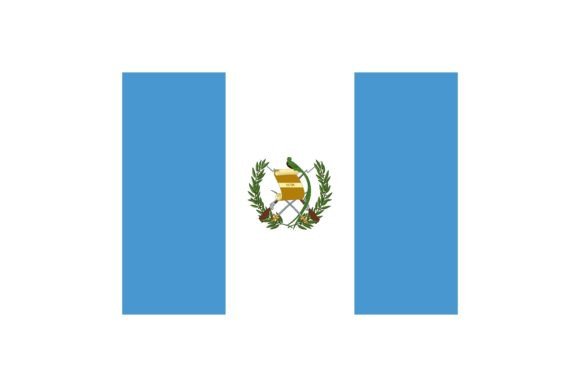
Vector Icon with Guatemala Flag: A National Symbol for Design and Communication Workflows
When you need to communicate national identity, cultural heritage, or geographic specificity in a visual project, few assets deliver as efficiently as a well-crafted vector icon. The Vector Icon with Guatemala Flag. Nationa serves this exact purpose—it distills the rich symbolism of Guatemala into a clean, scalable graphic that integrates into nearly any digital workflow. Whether you are building a presentation, designing a website, producing an infographic, or assembling a brand kit, this icon provides a precise visual shorthand for one of Central America's most culturally vibrant nations.
What the Vector Icon with Guatemala Flag Represents in Practice
At its core, this vector icon depicts the national flag of Guatemala, a design that carries deep historical and cultural meaning. The flag features two vertical blue stripes representing the Pacific Ocean and the Caribbean Sea, with a white central stripe symbolizing peace and purity. At the center sits the national coat of arms, including the Resplendent Quetzal—the national bird—and a scroll bearing the date of Central American independence. The Vector Icon with Guatemala Flag. Nationa captures these elements in a format that remains crisp at any size, making it suitable for both small interface elements and large print layouts.
From a practical standpoint, this icon belongs to the broader category of national flag vectors—assets commonly used in travel guides, country selector menus, educational materials, and international business communications. Its value lies in its ability to convey location and identity instantly, without relying on text that might need translation or localization.
Where This Icon Fits in Your Workflow
Understanding where to place a national flag icon in a project lifecycle helps you use it more effectively. The Vector Icon with Guatemala Flag. Nationa can serve different roles depending on when you introduce it.
Before a Project: Planning and Research
During the planning phase, you might use this icon as a reference marker in mood boards, wireframes, or content inventories. For example, if you are designing a multilingual website that will include a Guatemalan Spanish version, placing the flag icon in your site map early helps stakeholders visualize the scope. It also works as a placeholder in content management system prototypes, signaling where localized assets will appear.
During a Project: Implementation and Assembly
When you move into production, the icon becomes a functional element. Use it in user interface menus for language or region selection, in travel apps for destination tags, or in educational slides to label maps and timelines. Because it is a vector file, you can resize it without losing quality—from a 16-pixel favicon to a full-page poster graphic. This scalability reduces the need to maintain multiple raster versions, simplifying your asset library.
After a Project: Review, Revision, and Reuse
Once a project ships, the same icon can be repurposed. If you update a brochure for a new campaign or add a country page to a global report, the vector file remains editable and consistent. You can also reuse it across different projects without sourcing a new version each time, provided you maintain a centralized asset repository. This reuse saves time and preserves visual consistency across your organization's materials.
Integration with Other Tools and Assets
The Vector Icon with Guatemala Flag. Nationa interacts with several common tools and workflows. Here is how it typically fits alongside other resources:
- Design software: Import the SVG or EPS file directly into Adobe Illustrator, Figma, Sketch, Affinity Designer, or Canva. Most vector editors preserve the icon's layers and paths, allowing you to adjust colors, scale, or combine it with other graphics.
- Content management systems: Upload the icon to your CMS media library for use in country selectors, author bios, or location-based articles. Many modern CMS platforms support SVG natively, which keeps the file lightweight and responsive.
- Presentation tools: Insert the icon into Google Slides, PowerPoint, or Keynote to mark slides about Guatemala, Central American trade, or cultural topics. Because it is a vector, you can animate it or pair it with text without worrying about pixelation.
- Data visualization platforms: Use the icon in dashboards or reports created with Tableau, Power BI, or Google Data Studio to label map points or category headers. This helps viewers quickly associate data with a specific country.
- Print workflows: Embed the vector in InDesign or Illustrator files for brochures, banners, or signage. The icon prints cleanly at any resolution, which is essential for professional output.
When combining this icon with other assets, consider color harmony. The blue and white palette of the Guatemalan flag works well with neutral backgrounds or alongside other flags from Central America. If you are building a regional set, ensure consistency in style—same stroke weight, same level of detail, same file format—so the icons look cohesive when displayed together.
Practical Implementation Tips
To get the most from the Vector Icon with Guatemala Flag. Nationa in your daily work, apply these practical observations:
Organize Your Icon Library
Store the icon in a dedicated folder with clear naming conventions. For example, use a pattern like flag-guatemala.svg or gt-flag-vector.ai. Include metadata tags such as "Guatemala," "flag," "national symbol," and "Central America" in your asset manager. This makes retrieval fast when you are in the middle of a deadline.
Check Compatibility Before Importing
Not all design tools handle SVG files identically. Before committing to a large workflow, test the icon in your primary software. Some programs may misinterpret transparency layers or gradient fills. If you encounter issues, flatten the paths or convert the file to a simpler SVG version. Keeping a plain EPS backup also helps ensure cross-platform usability.
Maintain Consistency Across a Set
If you are using this icon alongside other national flag vectors, verify that all icons share the same aspect ratio, stroke width, and style. A squared flag icon will look mismatched next to a rectangular one. Standardizing your flag collection improves the professional appearance of any project and reduces rework later.
Use the Icon for Quality Control
When reviewing layouts that include multiple country references, the flag icon serves as a quick visual check. If the Vector Icon with Guatemala Flag. Nationa appears misaligned, incorrectly colored, or distorted, it signals that other elements in the layout might also need attention. Treating the icon as a quality marker can help you catch errors early in the review process.
Efficiency and Consistency in Long-Term Use
One of the strongest arguments for using a vector icon over a raster image is long-term maintainability. The Vector Icon with Guatemala Flag. Nationa does not degrade over time. It remains identical across hundreds of projects if you use the same source file. This consistency is valuable for brands, educational publishers, and organizations that produce ongoing content about Guatemala or Central America.
To make reuse efficient, adopt a version control habit. When you update the icon—perhaps to match a revised flag specification or to optimize the file size—save the new version with a clear version number or date. This prevents confusion when multiple team members access the asset.
Additionally, consider creating a style guide entry for the icon. Document its intended use, minimum size, color values (hex codes for the blue and white), and any restrictions on modification. This documentation becomes especially important when handing off projects to contractors or new employees.
Use Cases Across Different Audiences
The Vector Icon with Guatemala Flag. Nationa serves a variety of professionals beyond graphic designers. Here are specific scenarios where it fits naturally:
- Marketers: Use the icon in regional landing pages, email headers, or social media graphics for campaigns targeting Guatemalan audiences. It signals localization and cultural awareness.
- Educators: Include the icon in geography worksheets, culture modules, or language learning materials. It helps students visually anchor country-specific information.
- Travel and hospitality professionals: Place the icon in itinerary PDFs, hotel booking interfaces, or travel blog headers to denote destinations or services available in Guatemala.
- Nonprofits and NGOs: Use the icon in reports, donation pages, or impact summaries when referencing projects based in Guatemala. It adds a humanizing touch to data-driven content.
- Small business owners: If your e-commerce store ships to Guatemala or sources products from there, the icon can appear on shipping policies, product origin labels, or customer support pages.
Final Observations on Practical Integration
When you drop the Vector Icon with Guatemala Flag. Nationa into your workflow, you are not just adding a graphic—you are embedding a communication shortcut. The icon carries cultural weight, geographic precision, and immediate recognizability. To use it well, treat it as a functional asset rather than a decorative afterthought. Plan where it will appear, test how it behaves in your software environment, and maintain it as part of your standard asset library.
The most effective users of this icon are those who integrate it early in their process, keep it organized for reuse, and pair it with complementary assets like neighboring country flags, regional map outlines, or typographic labels. By doing so, they ensure that the icon supports their broader communication goals without adding friction to their workflow.
Whether you are building a single presentation or managing a global brand system, this vector icon delivers clarity and professionalism. It is a small asset with a large role—one that, when handled thoughtfully, enhances both the efficiency of your process and the quality of your final output.